When customers purchase and choose diving suits, they are most concerned about whether the material is environmentally friendly, how durable it is, and how good its warmth retention and elasticity are. The mainstream material for high-quality diving suits on the market is high-elasticity neoprene (NEOPRENE). The inner layer is made of nylon fabric or polyester fabric. It is environmentally friendly, odorless, has strong elasticity, retains warmth and is waterproof, resistant to seawater corrosion. It does not harden or crack even when soaked in seawater for a long time, and is recognized as a high-quality fabric in the industry.
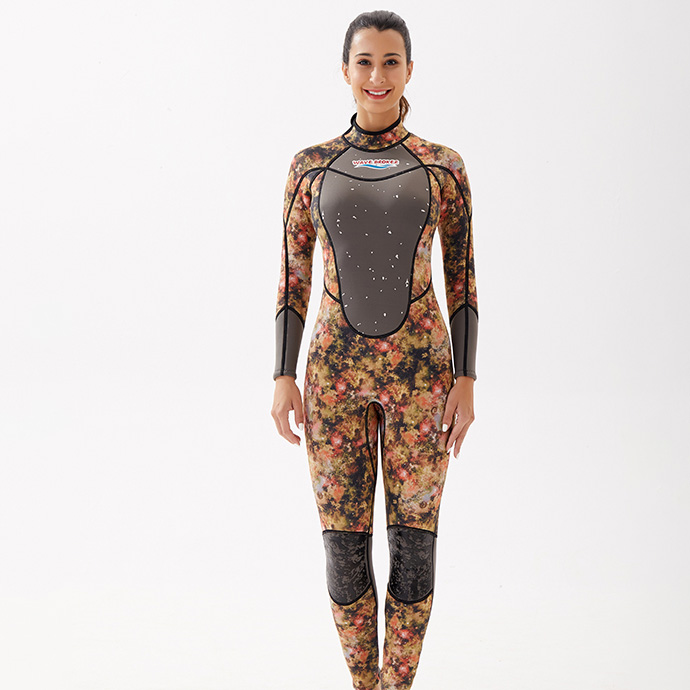
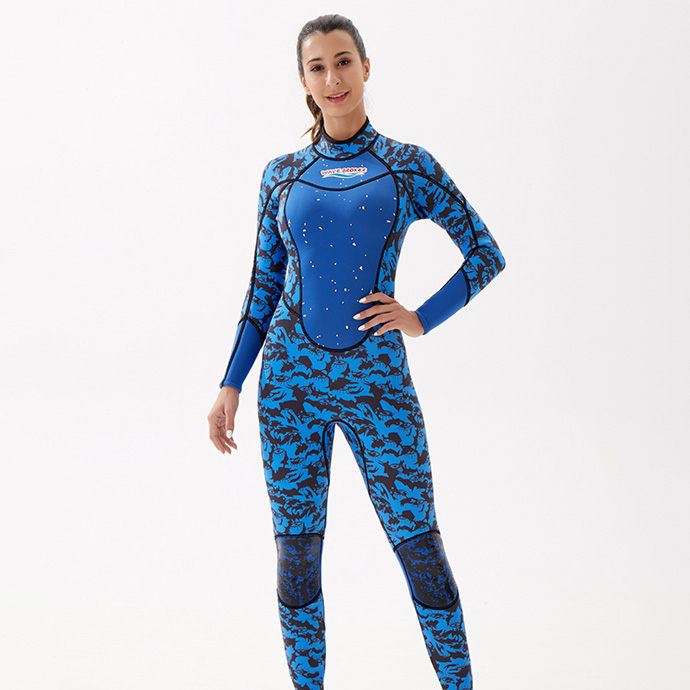
Many customers cannot distinguish between wet and dry diving suits and do not know which one suits them. In fact, the application scenarios of the two are quite different. The wet diving suit is the most common style on the market. Its material is mostly chloroprene NEOPRENE. It has a close-fitting design. A small amount of seawater seeping into the inner layer of the fabric forms an insulation layer, which isolates the cold water circulation.
Lycra fabric is an important chemical fiber fabric, which has advantages that other fabrics cannot compare. Among them, good elasticity and non-deformation are its biggest advantages.
Diving suit is a kind of synthetic rubber foam. There are two kinds of white and black. Black is more commonly used. It has a delicate, soft, and elastic touch. It has the characteristics of shockproof, thermal insulation, elasticity
1. Apply the original washing powder solution for hand washing to the stains, cover the stains completely, and let stand for 5 minutes (during which time gently wipe the stains), and add washing powder for regular cleaning;
The advantages and disadvantages of Lycra clothing
Advantages:
Unparalleled malleability. Affected by Lycra, the fiber in Lycra cotton is easy to stretch, just like the rubber man in the comics, it can be stretched freely, and it can be restored to its original state when it is not stressed.
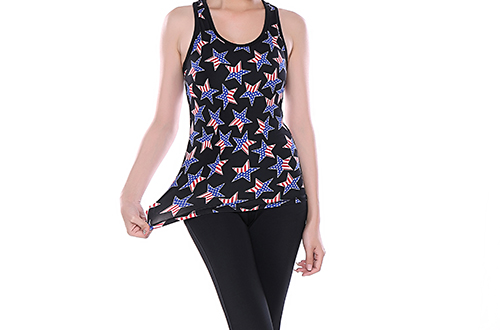
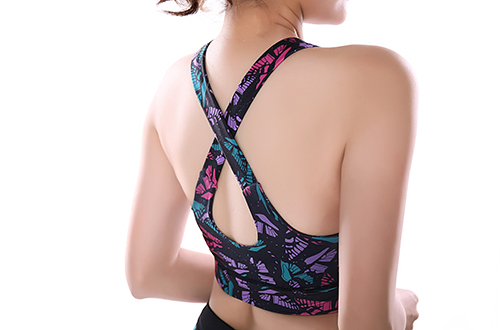

 Ali Mall 1
 Chinese